
Urban and Regional Planning is a multidisciplinary field that, in a broad sense, examines and evaluates the physical and social dimensions of space—along with all the elements and challenges that have shaped it from the past to the present—and guides its development by creating forward-looking economic, political, functional, social, and physical designs to guide its development.
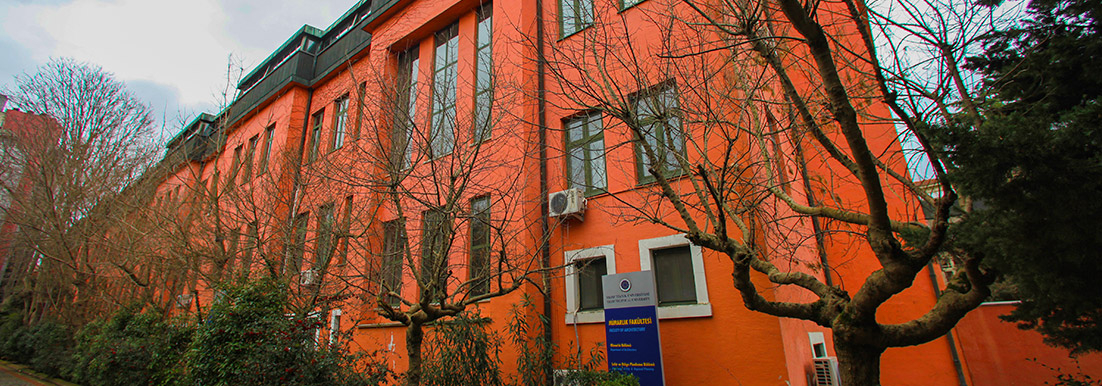
It is often stated that the profession of urban planning emerged globally as part of a search for methods to bring under control and overcome the various environmental problems arising in urban spaces that had fallen into disrepair during the rapid and excessive industrialization process. However, it is evident that urban planning was not solely centered on liberal property rights but was also intertwined with socialism, particularly during its utopian phase in the 19th century. One of the pioneering experiences in the separation of urban planning from architecture as a distinct discipline is described as the pragmatic approaches taken in cities in England struggling with the consequences of industrialization, which evaluated the findings of public health surveys and led to the enactment of laws aimed at making the city healthier. Another significant pioneering experience was the Haussmann project in Paris during the mid-19th century, led by Napoleon III, which involved the demolition and reconstruction of the entire city. In the period following all these destructive and creative experiments, practices were refined through criticism from various perspectives, and the foundations were laid for the discipline of urban planning—a multidisciplinary profession and field of endeavor in its own right, gradually separating from architecture.
In Turkey, too, the emergence of planning as a professional field was actually shaped by the Republic’s perspective on modernization and enlightenment. Although various legal regulations and initiatives had been implemented earlier to organize and control urban space, its definition as a comprehensive professional field and the commencement of planning efforts were products of the Modern Republic.
The paradigm shifts and
ruptures experienced in society and other scientific fields have also manifested themselves at every stage within the field of planning. Urban planning, which developed from the perspective of modernity’s understanding of science, by the 1970s, it had adopted theoretical approaches that, alongside postmodern critiques, interpreted the city through the lens of diversity and differences, developed an egalitarian quest, and sought to ground itself in a negotiated perspective using techniques shifting from rationalist to communicative rationality.
If we are to evaluate today’s urban planning experience—which we
have briefly summarized as a series of transitional processes, each representing significant milestones—it is particularly important to recall its principles and responsibilities. For example, because it prioritizes the common values and interests of society over the interests of individuals, it is committed to social justice; because it seeks to ensure the balance of power not from the perspective of the dominant group but from that of disadvantaged social groups, it is egalitarian; and because it seeks to develop a transparent and participatory framework in decision-making processes, it assumes important responsibilities for embedding democratic ideals in society and preserving a culture of coexistence.
It is known that 54% of
the world’s population currently lives in cities, and this percentage is projected to approach 70% by 2050. In our country, however, this threshold has long been surpassed, and the urbanization rate has now reached 75%. For this reason, the continued acceleration of urbanization has made urban policies—and, consequently, urban and regional plans—of vital importance. To ensure the preservation of our living spaces and future through the more efficient use of scarce resources, the protection of our natural values and ecological balance, the preservation of our cultural heritage through its active promotion, the restoration of our cities—where quality of life has declined—to a healthy environment, and the provision of a balanced, livable environment for future generations. For all these reasons, the trajectory of planning education in our country must be carefully evaluated and given due importance.
The planning profession and planning efforts
, with the history we mentioned above, have begun to be presented and perceived today as an instrumental endeavor focused on urban renewal—one that started primarily for disaster prevention but now operates largely along the axis of increasing the value of urban spaces. The fundamental duties of the profession—defending the public interest, social values, universal urban planning principles, and scientific truths—continue to exist as a social responsibility resting on the shoulders of urban planners.
Taking into account the scope
that the field of urban studies and the discipline of planning have reached under today’s conditions, course syllabi and content are frequently reviewed and enriched with new concepts and practices. The curriculum of the four-year undergraduate program offered by the Department of Urban and Regional Planning at Yıldız Technical University is organized into theoretical courses and planning studios. Theoretical courses cover the universal concepts and principles of the field of planning, as well as the knowledge and skills students will use in their professional practice upon graduation. Planning studios, on the other hand, are conducted as applied projects in selected cities, teaching the processes of analysis, synthesis, and planning.
Since its establishment in 1982 to offer undergraduate education
, the Department of Urban and Regional Planning at Yıldız Technical University has admitted 52 undergraduate students annually through the university entrance exam. With a faculty of 33 members, the department offers both undergraduate and graduate (master’s and doctoral) education. As of 2026, there are 392 undergraduate and 149 graduate students enrolled in the department. Graduate education, which began in 1973, is currently offered through six graduate programs housed within the Institute of Natural Sciences: (Urban Regeneration and Planning, Urban Space Organization and Planning, Urban Conservation and Planning, Landscape Planning, Regional Planning, and Applied Urban Science and Urban Innovation) and one doctoral program (Urban Planning).
Graduates of the Department of Urban and Regional Planning can work in both the public and private sectors. In the public sector, they hold positions at various levels, ranging from ministries (such as the Ministry of Environment and Urbanization, the Ministry of Development, and the Ministry of Culture and Tourism) to municipalities. They work across a wide range of scales and sectors, from the largest-scale regional plans down to the smallest settlements. In the private sector, they can engage in all phases of urban and regional planning, either as employees or as employers. Additionally, they serve as planners in any sector requiring planning expertise (such as real estate development and investment firms).